
minolta srt 201 instruction manual
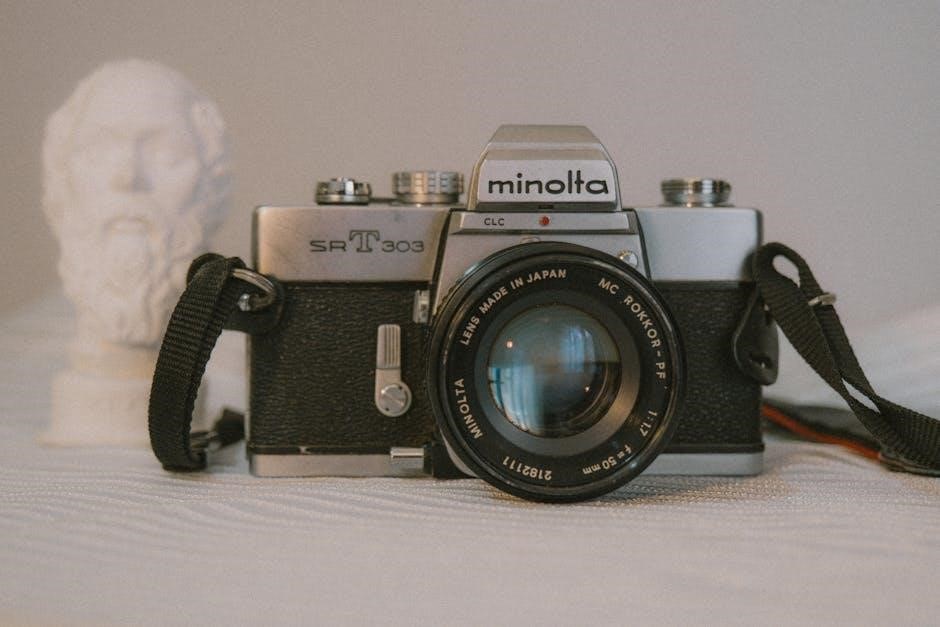
The Minolta SRT 201, a classic 35mm SLR, gained popularity due to its reliable mechanics and accessible through-the-lens (TTL) metering system.
Numerous instruction manuals, often available as PDF downloads, aided users in mastering its features.
Owners could find detailed guides for film loading, exposure settings, and lens compatibility, enhancing their photographic experience with this iconic camera.
Historical Context of the SRT Series
The SRT series, launched by Minolta in 1966 with the SR-T 101, represented a significant leap forward in affordable SLR technology. These cameras, including the SRT 201, were designed to bring advanced features, like TTL metering, to a wider audience.
Instruction manuals played a crucial role in demystifying these new capabilities for photographers. The SRT 201, introduced later, built upon the foundation of its predecessors, offering refinements and enhanced usability.
Early manuals often detailed adapting lenses from other systems, like Leitz, showcasing the camera’s versatility. The series’ success stemmed from its blend of quality construction, innovative features, and comprehensive documentation, making it a favorite among enthusiasts.
Key Features and Specifications
The Minolta SRT 201 boasts a horizontally-traveling cloth focal-plane shutter, offering speeds from 1 to 1/1000th of a second. It features a TTL center-weighted metering system, detailed in its instruction manual, powered by a PX28 battery.
Compatible with Minolta MC and MD lenses, the camera supports manual aperture control. Manuals emphasize the importance of setting the correct ISO for accurate exposure. Key specs include accepting 35mm film and offering a self-timer function. The PDF manual clarifies operation, while service manuals aid repair. Its robust build and user-friendly design made it a popular choice.

Understanding the Camera Body
The SRT 201’s body, detailed in the manual, houses the film advance and shutter mechanisms. PDF guides illustrate proper film loading and operation for optimal results.
Film Loading and Advance Mechanism
The Minolta SRT 201’s film loading process, thoroughly explained in the owner’s manual, begins by opening the camera back with the film release lever. The manual details how to correctly position the film canister and leader onto the take-up spool.
Advancing the film utilizes a single-stroke lever, and the manual emphasizes smooth, complete strokes to ensure proper film transport. A frame counter displays the number of exposures taken. The manual also provides guidance on rewinding the film, utilizing the rewind crank, and opening the camera back to retrieve the finished roll.
PDF versions of the manual often include diagrams illustrating each step, making the process clear for both beginners and experienced photographers. Proper film loading is crucial for avoiding jams and ensuring consistent results, as highlighted in the instruction manual.
Viewfinder and Focusing System
The Minolta SRT 201’s viewfinder, detailed in the instruction manual, provides a bright and clear view of the scene. The manual explains the presence of a split-image focusing aid in the center of the viewfinder, crucial for achieving sharp focus. Surrounding the split-image is a microprism collar, assisting with fine-tuning.
The manual clarifies how to align the split-image for precise focusing, ensuring subjects appear crisp. It also describes the viewfinder’s display of the selected shutter speed and aperture settings. PDF versions of the manual often include diagrams illustrating the viewfinder’s layout.
Understanding the focusing system, as outlined in the manual, is key to capturing well-defined images with the Minolta SRT 201. Proper use of the split-image and microprism collar guarantees optimal sharpness.
Shutter Speed and Aperture Control
The Minolta SRT 201 instruction manual thoroughly explains the camera’s shutter speed and aperture controls. Shutter speeds range from 1 second to 1/1000th of a second, selectable via a dial on the camera body. The manual details how these speeds affect motion blur and image brightness;
Aperture control, managed through the lens, dictates depth of field. The manual illustrates how different aperture settings impact the area in focus. PDF versions often include charts demonstrating the relationship between aperture, shutter speed, and exposure.

The manual emphasizes the importance of coordinating shutter speed and aperture for proper exposure, referencing the camera’s built-in exposure meter. Mastering these controls, as described, is vital for achieving desired photographic effects with the SRT 201.
Lenses and Compatibility
The Minolta SRT 201 instruction manual details compatibility with Minolta MC and MD lenses. Adaptors allow use of other mounts, expanding creative options.
Minolta MC and MD Lenses
The Minolta SRT 201 instruction manual emphasizes the seamless integration with Minolta MC (Metered Cell) and MD (Minolta Design) lenses. These lenses, designed specifically for the Minolta system, offer full aperture control directly through the camera’s viewfinder.
MC lenses, predating the MD series, feature a distinctive chrome aperture ring. MD lenses, introduced later, showcase a more modern, black finish and often incorporate electronic contacts for enhanced functionality in later Minolta bodies.
The manual clarifies that both MC and MD lenses provide full metering capabilities when mounted on the SRT 201, allowing photographers to accurately assess exposure before taking a shot. The aperture setting, visible above the viewfinder, confirms the selected f-stop.
Adapting Other Lens Mounts
The Minolta SRT 201 instruction manual doesn’t directly detail adapting other lens mounts, but acknowledges the possibility of using lenses like adapted Leitz Photar and Telyt-S. Adapting requires specialized adapters, converting the lens mount to fit the Minolta SR mount.
However, the manual cautions that full functionality, particularly automatic diaphragm control, may not be achievable with all adapted lenses. Manual aperture control becomes necessary in many cases.
Successful adaptation relies on precise adapter fit and understanding potential limitations. Photographers should consult additional resources for specific adapter compatibility and usage instructions. While versatile, adapting lenses requires careful consideration and may impact metering accuracy.

Using the Exposure Meter
The SRT 201’s instruction manual details its TTL metering system, activated by half-pressing the shutter. Interpreting the viewfinder display is key to achieving correct exposure.
Meter Activation and Operation
The Minolta SRT 201’s exposure meter is activated by gently pressing the shutter button halfway down. As outlined in the instruction manual, this action initiates the TTL (Through-The-Lens) metering process. A needle within the viewfinder displays the exposure reading. The meter requires sufficient light to function accurately; low light conditions may necessitate using a handheld light meter or employing bracketing techniques.
The manual emphasizes that the meter responds to the light reflected from the scene as viewed through the lens. Battery power is crucial for meter operation, and a weak battery will result in inaccurate readings. Regularly checking the battery’s condition, as described in the manual, is essential for reliable performance. The meter operates in match-needle mode, requiring the user to adjust aperture and shutter speed until the needle aligns with the center mark.
Interpreting Meter Readings
The Minolta SRT 201’s viewfinder needle indicates exposure levels. As detailed in the instruction manual, when the needle aligns with the center mark, proper exposure is suggested at the selected aperture and shutter speed. If the needle points to the “+” side, the scene is brighter, requiring either a faster shutter speed or a smaller aperture. Conversely, a reading on the “-” side indicates underexposure, necessitating a slower shutter speed or a wider aperture.
The manual clarifies that these are guidelines, and artistic preference may dictate deviating from the meter’s recommendation. Understanding the relationship between aperture, shutter speed, and ISO is vital for accurate interpretation. Remember to consult the PDF manual for detailed explanations and examples of how to achieve desired effects, like shallow depth of field or motion blur;

Shooting with the Minolta SRT 201
The instruction manual guides users through setting film speed (ISO), utilizing the exposure meter, and mastering focusing techniques for optimal results with the SRT 201.
Setting Film Speed (ISO)
The Minolta SRT 201 instruction manual details a straightforward process for setting the film speed, crucial for accurate exposure. Locate the ISO/ASA dial, typically surrounding the shutter speed dial. This dial features a range of numbers representing different film sensitivities.
To set the correct ISO, lift the dial and rotate it until the number corresponding to your film’s ISO rating aligns with the indicator mark. Common ISO values include 25, 50, 100, 200, and 400. Ensure the setting is precise, as an incorrect ISO setting will lead to under or overexposed photographs.
The manual emphasizes that matching the ISO setting to the actual film speed is fundamental to utilizing the camera’s TTL metering system effectively. Always double-check the setting before loading the film, guaranteeing accurate exposure throughout your shooting session.
Depth of Field and Focusing Techniques
The Minolta SRT 201 instruction manual explains depth of field, the area in acceptable focus, is controlled by aperture. Smaller apertures (higher f-numbers like f/16) yield greater depth of field, ideal for landscapes. Larger apertures (lower f-numbers like f/2.8) create shallow depth of field, useful for isolating subjects.
Focusing is achieved using the lens focusing ring, observing the image in the viewfinder. Split-image rangefinders aid precise focusing; align the split image for sharpness. The manual details how aperture and focal length influence depth of field.
For moving subjects, pre-focusing on a predicted location is recommended. Mastering these techniques, as outlined in the manual, allows photographers to creatively control focus and depth within their images.
Using the Self-Timer
The Minolta SRT 201 instruction manual details the self-timer function, located on the camera’s front. Activating it involves moving the self-timer lever to the ‘B’ or ‘T’ position, then pressing the shutter button. This initiates a delay, typically around 10 seconds, before the shutter releases.
The manual emphasizes ensuring the camera is stable – using a tripod is highly recommended – to avoid blur during the self-timed exposure. It clarifies that the delay duration isn’t adjustable.
This feature is ideal for group photos or situations where the photographer wants to be included in the frame. Proper use, as described in the manual, ensures sharp, well-composed self-portraits and group shots.

Maintenance and Troubleshooting
The Minolta SRT 201 manual advises regular cleaning and proper storage. Common issues, like light leaks, are addressed with troubleshooting steps within the PDF guide.
Cleaning and Storage
The Minolta SRT 201 instruction manual emphasizes gentle cleaning practices to preserve the camera’s functionality. Dust the body with a soft brush, avoiding abrasive cleaners. The lens should be cleaned with lens paper and appropriate cleaning solution, following the manual’s guidance.
For storage, the manual recommends a dry, dust-free environment. Remove batteries to prevent corrosion. Long-term storage benefits from a silica gel packet to absorb moisture. Avoid extreme temperatures and humidity. Proper storage, as detailed in the PDF manual, ensures the camera remains in optimal condition, ready for future use. Careful handling and adherence to these guidelines will extend the lifespan of your Minolta SRT 201.
Common Issues and Solutions
The Minolta SRT 201 instruction manual addresses potential issues like inaccurate meter readings, often due to aging batteries – replacement is key. Sticky shutter speeds can occur from infrequent use; regular operation helps. If film advance becomes stiff, a professional cleaning is advised.

The manual doesn’t cover extensive repairs, but suggests checking battery contacts and the film loading mechanism. Online resources and PDF versions often detail further troubleshooting. For complex problems, seeking a qualified camera technician is recommended. Remember, attempting self-repair without proper knowledge could cause further damage to your classic Minolta SRT 201.

Accessing the Instruction Manual
Minolta SRT 201 instruction manuals are readily available online as free PDF downloads, offering comprehensive guides for camera operation and maintenance.
Locating the PDF Manual Online
Finding a Minolta SRT 201 instruction manual in PDF format is surprisingly straightforward in today’s digital age. Several websites specialize in archiving vintage camera documentation. OrphanCameras.com is a notable resource, offering English and French versions of manuals for various SR-T models, including the 201.
A simple web search using terms like “Minolta SRT 201 manual PDF” will yield numerous results, often linking to sites hosting scanned copies of the original owner’s guides. These resources allow photographers to easily access detailed information regarding the camera’s functions, features, and troubleshooting tips.
Be cautious when downloading from unfamiliar sources, ensuring the site is reputable to avoid potential malware. Many camera enthusiast forums also provide links to downloadable manuals within their dedicated threads.
Understanding Manual Sections
The Minolta SRT 201 instruction manual typically begins with a detailed overview of the camera’s components, including the body, viewfinder, and shutter speed/aperture controls. Subsequent sections guide users through film loading and advancing, crucial for proper operation.
A significant portion focuses on the TTL metering system, explaining how to activate it and accurately interpret the readings for correct exposure. Lens compatibility, particularly with MC and MD lenses, is also thoroughly covered.
Further sections detail advanced features like the self-timer and depth of field control. Service manuals, while separate, offer in-depth repair guidance. Understanding these sections empowers users to fully utilize the SRT 201’s capabilities.
Related Models: SRT 101, SRT 202
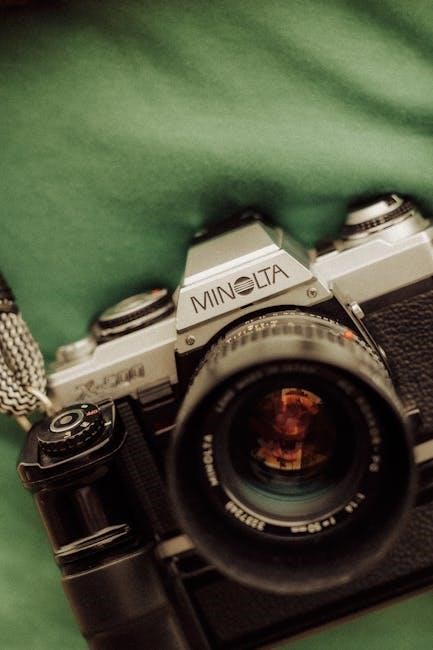
The SRT 101 and 202 share similarities with the SRT 201, with manuals often cross-referencing features. Service manuals exist for complete repair assistance.
Comparison of Features
Comparing the Minolta SRT 101, 201, and 202 reveals subtle yet significant differences detailed within their respective instruction manuals. The SRT 101, the earliest model, lacks the 201 and 202’s hot shoe for flash synchronization.
The SRT 201 introduced improvements like a self-timer, absent in the 101. Both the 201 and 202 feature through-the-lens (TTL) metering, but the 202 added a more modern, electronically controlled shutter, offering greater accuracy;
Lens compatibility remains consistent across all three – accepting Minolta MC and MD lenses. However, the 202’s electronic shutter requires a battery for operation, unlike the fully mechanical operation of the 101 and 201. PDF manuals highlight these distinctions, aiding photographers in selecting the model best suited to their needs.
Service Manual Availability
While instruction manuals for the Minolta SRT 201 are readily available as PDF downloads, locating a dedicated service manual proves more challenging. These technical guides, intended for qualified technicians, detail complete repair procedures.
Information suggests service manuals exist to assist in carrying out comprehensive repairs, covering disassembly, adjustment, and troubleshooting. However, they aren’t as widely distributed as the user manuals.
Online forums and vintage camera communities often serve as resources for locating these rarer documents. Searching specifically for “Minolta SRT 201 service manual” may yield results, though availability can be sporadic. Understanding the camera’s mechanics, as outlined in these manuals, is crucial for restoration projects.